
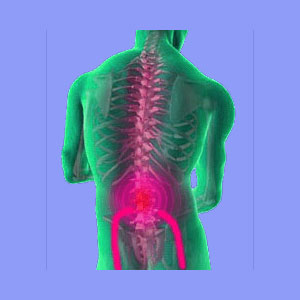
Bilateral sciatica is less prevalent than unilateral sciatic nerve pain. Bilateral means that symptoms are experienced on both sides of the body, although the patterns may differ from side to side. Either leg can be affected individually or both together at once. Bilateral symptoms have a reputation as being more variable in their locations and expressions than unilateral conditions. Most patients demonstrate pain, tingling, weakness or numbness throughout wide ranging areas of the lower back, buttocks, legs and feet.
This discussion focuses on painful sciatica which occurs in both legs together or in alternating and/or overlapping locations in both legs.
Bilateral Sciatica Causes
Bilateral sciatica conditions are statistically even harder to accurately diagnose than the unilateral variety. However, this does not stop doctors and chiropractors from linking the following structural issues to the symptomatic expressions in the majority of affected patients:
Herniated discs are the most common causative diagnosis, especially when they are large and centrally focused on the spinal cord or cauda equina.
Spinal stenosis can cause bilateral back and leg pain due to a wide range of possible causative mechanisms, including disc pathologies, atypical spinal curvatures, vertebral misalignments and arthritic processes.
Osteoarthritis might produce osteophytes and debris which may narrow the central spinal canal or the bilateral foramen at a given level.
Dual piriformis syndrome is theoretically possible, but extremely rare. The diagnosis however is relatively common, especially when there is no obvious spinal cause to blame.
Chemical radiculitis from a ruptured disc might create bilateral symptoms, if the nucleus proteins affect the nerve roots on both sides of the central canal or en masse in the cauda equina.

Just remember that all of these conditions can also act as scapegoats for pain in their asymptomatic forms. In a great number of patients, there is no definitive evidence of a pathological process which can adequately explain the symptoms suffered.
Sciatica in Both Legs from Oxygen Deprivation
As with all other sciatic nerve pain syndromes, ischemia is often the actual cause of symptoms, regardless of the diagnosis. Ischemia works regionally and can affect large areas of the body at once. This easily explains both the typical variable bilateral symptoms of sciatica, as well as the painfully debilitating spasms in the lower back, which often accompany acute attacks.
Oxygen deprivation is a possible source of a diversity of chronic dorsalgia syndromes, but has never made its way into the arsenal of medical diagnoses on any major level. This is due to the economic consequences of acknowledging a harmless nonspinal causative condition within the back pain industry, as well as a general reluctance to accept the constant interactions between the mind and the body when it comes to sciatica syndromes.
Of course, some ischemia sciatica conditions are purely structurally-motivated by disease processes, soft tissue vascular compression or systemic circulatory concerns. These have a better chance of being correctly diagnosed and treated than mindbody varieties of oxygen deprivation.
Bilateral Sciatica Considerations
My sciatic nerve pain nightmare fit the bilateral profile. My symptoms have always changed frequently and usually exist in both legs at once, although the left side is often worse. In the distant past, I had widespread lower back and leg pain which was blamed on my 2 lumbar herniated discs and advanced degenerative disc disease. I tried everything to cure my severe sciatic nerve symptoms, but the pain simply would not leave.

The diagnosis was never conclusive to me, since there was no verified bilateral nerve compression, although it is possible that some of the cauda equina is affected by a large central herniation at L5/S1. Now, I feel that my later discovered cervical herniations are more probable as the source of most of my suffering, at least structurally. One intervertebral bulge, in particular, really displaces the spinal cord severely and this may explain the incredible diversity of symptoms I endured. I place far more credence in this theory than in the lumbar disc-enactment suspicions. All of this speculation is unnecessary now, since I was finally able to fully cure my pain.
If you are suffering with any treatment resistant sciatica pain, but especially if it is bilateral, you must seriously think about the validity of your diagnosis. Misdiagnosed sciatica is the #1 reason why patients never get better and truly recover.
If this sounds like your situation and you require help, be sure to discuss this possibility with your physician. A neurologist is usually the best choice to help you definitively uncover which nerves are truly affected, if any, and whether or not the symptoms you have actually make sense given the diagnostic theory.