
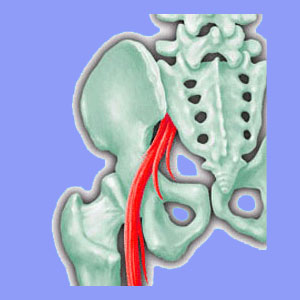
So many patients write to us asking the seemingly simple question: “What causes sciatica?” While it would be fantastic to be able to answer this query with a cookie-cutter response, this would be quite impossible, since the condition is extremely case-specific.
Generally, we advise patients to stop simply asking questions and instead, seek out the answers so that they can better understand their pain, and more importantly, work effectively towards finding a lasting cure.
The goal of this website is to educate patients and help provide them with answers to questions just like this one. After all, it is within every patient’s right to know what is causing their pain. If their doctors are not able to answer the question, then the patient will have to look elsewhere. This is a great place to start.
What Causes Sciatica? / Structural Issues
There are certainly anatomical concerns which can source sciatic nerve pain. Many of these conditions are typically linked to either injury or the various degenerative processes inherent to the spine. It is well known that many of these theorized causes of pain are often misdiagnosed, leading many patients on fruitless quests for relief using completely inappropriate sciatica treatments. This definitely helps to explain why sciatica is known as a treatment-resistant condition. However, it is not the ferocity of the disorder itself, in so much as the epidemic of misdiagnosis which truly deserves the blame. Here are some of the real reasons why sciatica may exist due to purely structural concerns:
Herniated discs can cause sciatica through the processes of foraminal stenosis or severe spinal stenosis.

Osteoarthritis can cause sciatica through the same processes, causing single or multiple nerve root compression.
Spinal curvature issues, such as scoliosis, can create alignment problems in the central canal and can also greatly diminish the patency of the neuroforamen.
Vertebral misalignment issues, such as spondylolisthesis, anterolisthesis or retrolisthesis can also cause the central canal or foraminal openings to lose patency due to misalignment.
Piriformis syndrome is a structural, nonspinal source of pain in some people wherein the piriformis muscle clamps down on the fully formed sciatic nerve outside of the spinal anatomy.
What Causes Sciatica? / Non-Structural Issues
Many cases of sciatica may be mistakenly linked to structural issues which are actually coincidental to the symptomatic expression. Other times, patients may not demonstrate any structural issues which explain their pain. Regardless, these non-structural sources of sciatica symptoms are often the real reason for the pain to exist:
Varicose veins or other circulatory concerns may cause some chronic sciatica complaints.
Diabetic neuropathy or other neurological disorder may cause sciatica.
Ischemic sciatica is one of the most common reasons for severe, widespread and chronic pain in the lower body. Ischemia can be further divided into cases caused by circulatory problems, cases caused by disease processes and cases enacted through the mindbody process.
Sciatica Causes and Coincidences
Discovering the reason for your sciatica may be challenging. This article details a great number of possible sources of pain, but many more actually exist. Understanding every diagnostic theory pronounced to explain your pain is crucial in order to prevent the very real risk of misdiagnosis. I know, since my pain was mistakenly blamed on coincidental lumbar spinal reasons for decades.
Learn all you can about the possible sources of your pain and look for inconsistencies in the diagnostic theory, particularly if multiple treatments have not resolved the symptoms. Most of all, be open minded to the possibility that your pain may be a result of non-traditional or nonstructural explanations, since this is often the case.