
Sciatica from chemical radiculitis is a highly controversial medical subject, since many doctors do not agree that the chemical radiculitis condition even exists, and if it does, that it may be capable of enacting widespread sciatica pain, rather than minor localized nerve symptoms.
Chemical radiculitis is a process by which the spinal nerve tissues are chemically irritated by leaking intervertebral disc proteins. Chemical radiculitis is one of the possible explanations for structurally-induced sciatica symptoms, when an annular tear is present, but no definitive nerve compression is deemed to exist.
This article will provide an account of how chemical nerve root irritation may be responsible for sciatica sufferings in rare instances.
What is Chemical Radiculitis Sciatica?
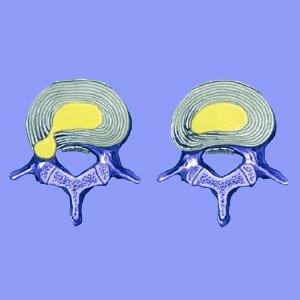
Chemical radiculitis is a theoretical condition in which a patient suffers a ruptured disc or annular tear and endures the leaking of internal disc proteins unto sensitive neurological tissues. The thought goes that this protein is an irritant and therefore creates pain when contact with nerves occurs.
It must be noted that annular tears, disc ruptures and disc extrusions are commonplace and are not necessarily painful at all. Many patients have obvious conditions in which the disc proteins contact the nerves, but enact no pain at all. Therefore, it is part of the working theory that only some patients may have particular sensitivities to the disc proteins enough to warrant painful expressions in neurological tissue.

Sciatica from Nerve Irritation
Even in patients who may show the susceptibility to pain from chemical irritation conditions, it is not clear why sciatica would be the result, as opposed to localized nerve pain. Most of the nerves in question are small and located in the vicinity of the herniation, including in and around the spinal joints and vertebral endplates.
Of course, if the tissue in question is a spinal nerve root which makes contact with the irritating proteins, then at least there is some viability for the diagnosis to be correct. However, even in the vast majority of these possible scenarios, the symptoms produced are far too diverse and wide ranging to be produced from single level protein irritant contact with a nerve root, basically voiding the diagnostic theory in most cases.
Sciatica from Chemical Radiculitis Conclusions
Chemical radiculitis is a diagnosis which often comes into play after multiple failed attempts at treatment for a herniated disc using conservative, moderate or even surgical modalities. Eventually if the patient demands answers that the doctor can not provide them, the chemical radiculitis diagnosis may be proposed, particularly in patients with known annular tears, ruptures or extrusions.
In cases where the diagnosis is correct, flushing injections can usually relieve the symptoms and if no improvement is experienced from multiple rounds of epidural injections, then patients would be wise to truly reconsider the validity of the diagnosed theory.
To learn more about chemical irritation of the spinal nerve structures, consult with your neurologist. You can also study the condition is vivid detail on Herniated-Disc-Pain.Org at their awesome chemical radiculitis discussion forum.
Sciatica > Sciatica Causes > Sciatica from Chemical Radiculitis