
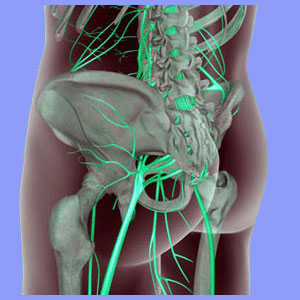
Sciatica numbness is another very common neurological symptom suffered by many patients who endure the burden of lower back and leg pain syndromes. Numbness is a condition characterized by an objective or subjective lack of feeling. Numb sensations are often accompanied by actual or perceived weakness and are typically preceded or followed by tingling, as the numb feeling begins or dissipates.
This resource section will provide a detailed look at symptomatic numbness in association with sciatic nerve pain conditions.
Why Does Sciatica Numbness Occur?
Numbness might be the actual result of nerve compression. The majority of back pain conditions, and virtually all sciatica scenarios, suppose some spinal structure to be compressing a nerve root, usually in the lower lumbar region. It is known that continued compression of any nerve will cause that nerve to stop signaling altogether. The result would be numbness. Not pain. Not tingling. Just numbness, in its objective form.
While a numb sensation is a part of many sciatica syndromes, it is typically subjective, accompanied by tingling and especially chronic pain. These symptoms are not characterized by steady single level nerve root impingement of any type. However, other spinal processes, such as central stenosis, nonspinal processes, such as piriformis syndrome, and even nonstructural processes, like regional ischemia can responsible for causing all three symptoms.
Since the lumbar spine is the area which suffers the most degeneration and also demonstrates the highest incidence of abnormalities, it is easy to see why so many neuropathy syndromes are theorized to be sourced here. Of course, in many instances, the diagnosis may be valid and correct, but in others, it is inaccurate, leading to the disappointing therapy results which plague most patients.

Numbness Discussions
Foot numbness can be expressed in part of the foot or in the entire foot, unilaterally or bilaterally.
Leg numbness usually affects a specific region of the upper or lower leg, bilaterally or unilaterally.
Numbness Conditions
Numbness can be felt in any area served by the sciatic nerve or one of its peripheral branches. This basically opens up the entire lower body to symptomatic expression. Numbness which occurs due to sciatica is typically followed or preceded by tingling and pain.
Think about when your arm or leg falls asleep from staying in an uncomfortable position for too long. First, you do not realize it has occurred. Then it feels numb. You move around, which stimulates circulation in the affected region. This oxygenates the tissue. The nerves revitalize, causing tingling as signals begin to transmit back and forth. Pain comes next, as tissues struggle to deal with cellular waste products which have not been adequately removed due to the utter lack of blood supply.
This is ischemia and it is exactly what causes many sciatic nerve pain conditions. However, unlike an arm or leg which has fallen asleep due to improper positioning, this ischemic process can be caused by circulatory system problems, diseases, tumors or even enacted purposefully, creating what is known as psychogenic sciatica.
Sciatica Numbness Help
Numbness is scary. I remember losing all feeling in my entire lower back and upper legs on several occasions. I could not even hold myself upright during these events. Now, I usually only have a small degree of subjective numbness in parts of my left foot. I can feel everything, but the foot has a heaviness and demonstrates less sensation.

In my experience dealing with literally tens of thousands of patients each and every year, I see many patterns emerge in my research efforts. Most numbness associated with sciatica is highly subjective. This makes it unlikely to be caused by the most commonly diagnosed process, which is foraminal stenosis leading to a pinched nerve. Sure, the nerve might only be partially compressed, but this is a highly controversial diagnosis which may not enact any symptoms.
Central spinal stenosis may be a more logical conclusion in the structural arena, since this condition can enact perceived numbness, as well as a great diversity of other terrifying symptoms. Worse still, stenosis can exist anywhere in the spine and still cause sciatica-type events. There may certainly be other explanations, as well, including piriformis concerns, tumorous growths, localized nerve or vascular dysfunction, disease processes and the aforementioned oxygen deprivation processes.
Remember to consider the type of numbness you have and compare it to the expected patterns for your condition. This is a great way to be proactive in your fight against the frequent problem of misdiagnosis.