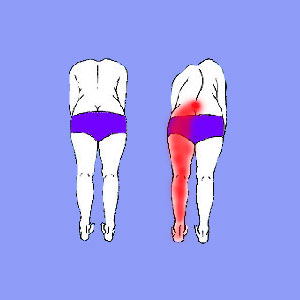
Scoliosis and sciatica are 2 conditions often associated with one another, since atypical curvature can create sciatic nerve symptoms. Scoliosis describes an abnormal side to side curvature of the spine. Although most mild cases are completely asymptomatic, some might create painful consequences in the lower back and legs. Meanwhile, other cases of scoliosis are mistakenly blamed for enacting pain, when all along the discomfort is actually the result of another physical or psychological source.
This article will describe how scoliosis can cause sciatica pain through various processes, but will also detail how many minor cases are mistakenly blamed for enacting symptoms which they do not actually source.
Scoliosis and Sciatica Relationship
Most mild to moderate examples of scoliosis might create visual deformities in the spine, but they do not generally cause pain or neurological concerns. Most abnormal spinal curvatures are minor and not the source of any significant health risk.
Some moderate scoliosis curves require regular monitoring by a specialist in the field, just to be sure that they do not cause any problematic concerns in the spine.
Some severe scoliosis curves can cause widespread pain and related neurological effects in many areas of the body. Luckily, extreme scoliosis is rare and does not represent the average patient’s experience with the condition.
In symptomatic forms, pain is usually elicited through foraminal stenosis, in which the neuroforamen at the apex of the open end of the curve become drastically narrowed by the scoliotic change.

In other cases, vertebral rotation might cause the central canal to lose alignment, enacting spinal stenosis.
Some cases of scoliosis are also deemed to be locally painful due to purely mechanical reasons, including unusual facet joint or vertebral interactions.
Pain from Scoliosis Scapegoat
Sciatica is an epidemic pain syndrome, affecting countless people with and without scoliosis. In many cases where both conditions exist together, the pain is blamed on scoliosis, even though the spinal curvature is minor and innocent of all accusations.
Some of these mistakenly diagnosed patients are actually suffering from regional ischemia as the real reason for their suffering. Others may be suffering with structural pain enacted by another unrelated spinal condition, such as a herniated disc.
Scoliosis can create a substantial diagnostic nocebo effect in adults and children alike. How the condition is presented to the patient upon diagnosis will have far ranging effects on whether or not a given individual might experience back pain at some point in their future. In essence, if the patient is frightened that they should expect pain, it is a safe bet that pain is already on its way, despite no actual physical reason for it to exist.
Scoliosis-Pain.Com provides a comprehensive outlook on atypical spinal curvatures and is a MUST read resource for all scoliosis patients.
Scoliosis and Sciatica Advice
Remember that most mild to moderate spinal curvatures are not problematic or symptomatic, despite the fact that many back care providers use them as targets to explain pain.
Sciatica pain exists in so many people and often can not be linked to a specific spinal source, despite agonizing symptoms. In most mild scoliosis patients, the pain is simply explained away, using the curvature as a fall guy.
If you are one of the exceptions to the rule who has severe or extreme scoliosis, then sciatica might be just one of many possible symptomatic expressions you might suffer daily. In these circumstances, I strongly advise using a combined care approach by consulting multiple types of physicians and complementary therapists to see which treatment modalities might bring about relief.
If surgery is suggested, be sure to demand correlation of neurological expressions, to provide the surgeon with the best evidence of the true source process for symptoms to exist. This will go a long way in helping you to achieve successful results from any procedure.
However, if you have unresolved sciatica which may have been blamed on your mild or moderate scoliosis, you might consider knowledge therapy as an alternative treatment option. It is highly effective in misdiagnosed cases and does not have any of the considerable risks inherent to scoliosis surgery. It may be worth a look if the diagnosis of a relationship between scoliosis and sciatica is suspect.