
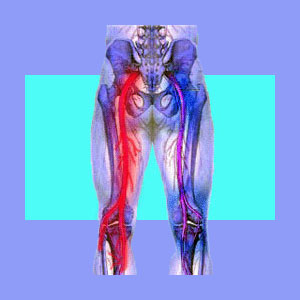
Sciatic nerve pain, otherwise known as sciatica, is an epidemic condition encompassing symptoms enacted in the lower body. Sciatica and general lower back pain are the most common of all serious dorsopathy syndromes and are also the most debilitating, since they involve the very muscles which are directly responsible for allowing us to maintain our normal upright postures as functional human beings. No two sciatica syndromes are identical, since the condition is usually a very case-specific and personalized form of chronic torture.
This article will provide some crucial pointers for patients who have been diagnosed with sciatic nerve pain due to a lumbar structural issue. We will discuss why these diagnostic conclusions are often invalid, and are actually extremely damaging, when coincidental irregularities might prevent accurate recognition of the real underlying source of pain.
Sciatic Nerve Pain Evaluation
The sciatic nerve is the largest, and statistically, also the most problematic nerve in the human body. When a patient experiences lower back pain, buttocks pain, leg pain or foot pain in combination, they are said to have sciatica. These symptoms generally consist of pain and possibly muscular spasms, accompanied by radiating weakness, numbness or tingling in the affected areas.
Sciatica can strike anywhere in the lower body, from the back to the feet, and is known as a very diverse symptomatic condition. It is virtually impossible to describe a typical case of sciatica, since every patient seems to demonstrate an individual set of symptoms. Worse yet, even these individualized sciatica symptoms might change often within the same patient in severity, location or expression.
The diagnosis of sciatica does not tell you much about the nature, severity or causation. It merely informs that there is pain and related nerve conditions in the lower body regions. Patients should never accept sciatica as a diagnostic conclusion, since the condition is a symptom set. It is never a causative condition unto itself, but merely the consequence of a greater source process.

Nerve Pain Explanations
True sciatica will be blamed on some spinal abnormality, such as a herniated disc, degenerative disc disease or spinal osteoarthritic process. In most patients these issues will reside in the lower lumbar levels of the vertebral column, but may also exist elsewhere and still cause symptoms in the lower body.
While some of these diagnostic theories are correct, it is unfortunate that many are not. This is no surprise, since medical science loves to link structural conditions to painful complaints, despite the overwhelming evidence that these spinal conditions are completely normal, mostly asymptomatic and virtually universal in the lower lumbar region.
If spinal causes were indeed to blame, then surely we would all have sciatica which should present strikingly similar symptoms and worsen as we age. However, this is simply not the case. Most sciatica complaints occur in people during the ages of most responsibility; 26 to 55. The incidence of symptomatic expressions actually decreases as lumbar spinal degeneration worsens.
This is just one of many sciatica facts which supports the idea that some radiculopathy conditions are not due to wear and tear on the spine, but may instead be caused by nonstructural processes, such as disease or psychosomatic causation using ischemia as its enforcer.
Sciatic Nerve Pain Overview
Sciatica is a torturous burden to bear and is known to resist treatment from many possible healing arts. All these therapies are well designed and completely appropriate to successfully treat the conditions for which they are indicated. Why then do they rarely work to cure sciatica pain? This is a question that has plagued doctors and patients for generations. However, the answer is simple and readily available for those who do some independent research away from the nocebo influence of the back pain industry’s money making machine.
For individuals who suffer year after year with the common treatment–resistant variety of radicular pain, there is a likely answer to the question: “Why won’t my pain go away?” Misdiagnosis is the most logical reason.
To summarize this article, let’s look at some facts worth considering:

Sciatica may be caused by injury or degeneration in the lower back, but these sources are more responsive to indicated treatment. In a great number of cases, the typical spinal irregularities implicated in causing sciatica are innocent and simply exist in the lumbar region without causing any pain.
In these instances, there may be a higher level spinal condition to blame, such as cervical spinal stenosis.
There may also be localized nerve dysfunction in the sciatic itself.
Piriformis syndrome might be the true explanation for symptoms.
Diabetic neuropathy might be the underlying source.
Disease or tumor formation can enact sciatica.
Finally, regional oxygen deprivation can affect the spinal nerve roots, or the sciatic nerve itself, and may be caused by physical or mindbody processes.
In all these alternate explanations, the scapegoat lumbar issues almost always prevent successful diagnosis of the true causation and this is why the pain endures, despite treatment.