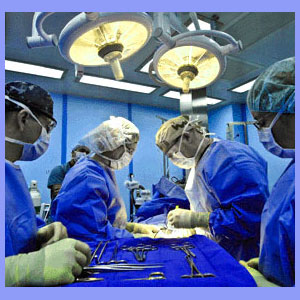
Sciatica surgery is a drastic treatment option that is typically recommended to patients with severe sciatic nerve pain who have not found lasting relief from more conservative therapy modalities.
This resource section details the surgical experience as a whole and how invasive procedures can be used to treat many suspected causes of sciatica. We will also investigate specific procedural options for treatment in a number of individual article selections below.
Sciatica Surgery Indications and Contraindications
Spinal surgery, no matter how minor, is never a small undertaking. There are always risks and potential complications, as well as the possibility of failed sciatic nerve surgery syndrome.
Surgery is statistically a poor choice for treating sciatica pain. Sciatica is most often blamed on some spinal abnormality which is thought to be causing a pinched nerve in the lumbar spine. In other instances, spinal stenosis virtually anywhere in the vertebral column can also create symptoms.
If the diagnosis is correct and conservative care is unlikely to provide any lasting benefit, then surgery may be a wise path to consider. However, this is taking a lot for granted. In many patients, the same structural issues thought to be causing sciatica turn out to be circumstantial and innocent of blame. These structural problems are often corrected surgically, yet symptoms continue, demonstrating that the diagnosis was incorrect from day one. This is far more common than you would think.

Sciatica surgery for disc pathologies does not fair as well as it does for arthritic foraminal or central stenotic changes. Likewise, any procedure involving a spinal fusion, such as those used to treat scoliosis or spondylolisthesis, has little hope of providing a permanent cure.
Surgery is virtually always appropriate for some confirmed cases of spinal structural pain, such as cauda equina syndrome. These instances are rare, but can become a medical emergency for any affected patient in a very short time frame.
Surgery for Sciatic Nerve Pain Topics
The essays below provide a comprehensive view of individual surgical topics:
Minimally invasive sciatic nerve surgery reduces collateral damage to healthy tissues, while still rectifying structural issues that cause pain.
Sciatica laser surgery is one of the growing sectors of minimally invasive surgery.
Sciatic nerve surgery alternatives allow patients to find lasting relief without undergoing the risks and pain of surgical interventions.
Spinal fusion for sciatica is added to many other types of procedures to stabilize the vertebral column.
Spinal disc replacement can restore functionality in the spine and prevent the need for fusion after significant disc surgery.
Discectomy for sciatica removes part of herniated or degenerated discs that are suspected of causing symptoms.
Laminectomy for sciatica can be used to treat a wide range of problematic conditions that might source sciatic nerve expressions.
IDET for sciatica and nucleoplasty for sciatica can treat contained intervertebral protrusions that create suffering.
Radiofrequency lesioning for sciatica is a form of symptomatic surgical treatment used to relieve pain.
Risks of surgery for sciatica are significant and need addressing prior to undergoing surgical care.
Recovering from sciatica surgery can be an arduous journey, but is made easier with proper aftercare.
Sciatica can actually be caused by surgery in many cases, even when the operation is nowhere near the spine.

Surgical Sciatica Experiences
Many patients undertake the surgical route because it is recommended by an orthopedic surgeon. Who would ever think that a surgeon might recommend surgery? To me, this seems like obvious logic to consider, but it seems to elude the minds of many confused patients already overburdened by their chronic pain and suffering.
Sciatica surgeons operate. It is what they do. They will often recommend surgery. Surgeons are business people. Surgeons want your business. Surgeons want to operate on you.
Makes sense right?
We generally recommend getting several opinions from various doctors, including at least one non-surgeon, before even thinking about undergoing an operation. Many less ethical doctors will use scare tactics to pressure patients onto the operating table. I personally know this for a fact, since it was done to me on more than one occasion during my own battle with lower back pain and sciatica.
One particular old cranky doctor actually told me there was a good chance I might become paralyzed imminently if I did not have a fusion to stabilize my lower spine. That was over 20 years ago. Can you imagine? Anyone who denies the power of the nocebo effect should receive a prognosis like this one and see how they feel.
Sciatica Surgery Recommendations
Our basic advice concerning surgery for any form of typical back pain is:
Don’t do it. Don’t even think about doing it. This is until you are 100% sure in the accuracy of the diagnosis and are also confident about your post-operative prognosis.
Surgery is appropriate for advanced scoliosis and other forms of spinal curvature, such as hyperkyphosis and hyperlordosis. It is often needed to correct verified compressive neuropathy or spinal cord compression conditions. However, for 95% of patients with the usual suspect diagnoses, such as minor versions of herniated discs, foraminal stenosis, spinal stenosis and degenerative disc disease, surgery is virtually never truly indicated.
Most patients who are affected with these conditions are damned no matter which path they choose. Surgery versus ongoing symptomatic treatment is a tough choice to make. Instead of an operation, I often recommend that patients consider non-surgical spinal decompression for disc concerns, as well as some forms of osteoarthritis and facet joint syndrome. This noninvasive modality demonstrates excellent results and allows you to bypass the nightmare which is spinal surgery.

In summation, do not rush into anything. Get involved in your own healthcare advocacy and do lots of research on your diagnosis. If you find it to be valid, then spend time researching treatment choices.
If you can avoid surgery, then please do so. If not, then get back to the research and learn all about your procedural options. There are usually many approaches to surgical care and results may vary greatly. Always choose the least damaging option which will successfully resolve the causative condition.
Prepare yourself for your surgical consultation with knowledge. This is your last hope to defend yourself against potentially unnecessary treatment.
Once you know the best procedure, then research a bit more until you find the perfect surgeon. Not all doctors are equal in their abilities, so be clear that your choice of surgeon will probably influence your final results more than any other single factor, as long as everything else detailed above has been properly attended to.
Our proven pain relief program has saved many patients from the horrors of sciatica surgery. Why take chances with a damaging operation, when most cases of sciatica can be cured using our safe and effective Cure Back Pain Forever Program.